Generative Engine Optimization (GEO) & Enterprise AI Search Services
The era of keyword-stuffed meta tags and ten blue hyperlinks has come to an end. Discovery is now mediated by Large Language Models, autonomous search agents, and multi-modal conversational reasoning engines. Digital Omani is the premier Generative Engine Optimization (GEO) consultancy in the Sultanate of Oman and the GCC, engineering your digital architecture so that Google Gemini, Search Generative Experience (SGE), OpenAI ChatGPT Search, Perplexity AI, Microsoft Copilot, and Anthropic Claude cite your enterprise as the definitive industry authority.
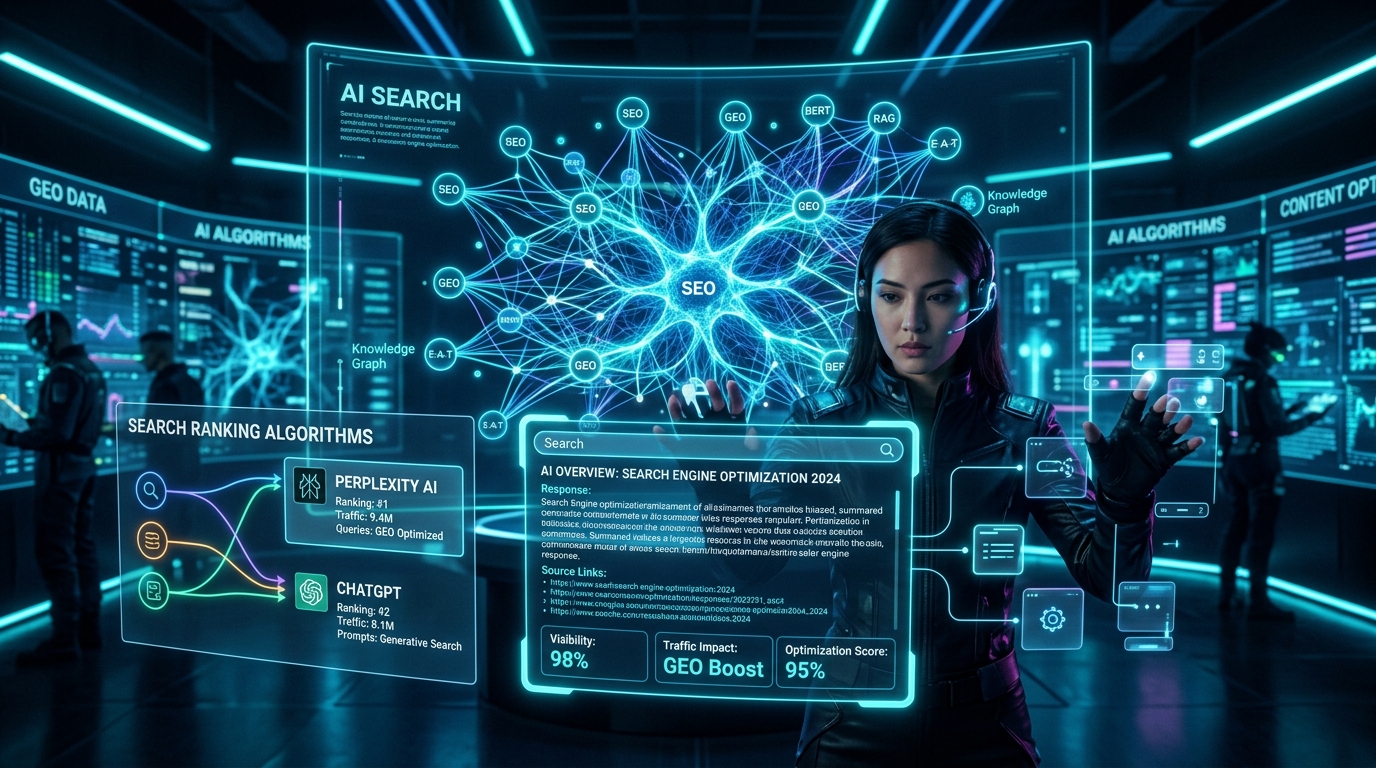
1. The Paradigm Shift: From Indexing Hyperlinks to Neural Answer Synthesis
For more than twenty-five years, Search Engine Optimization operated under a consistent paradigm: search engines dispatched automated web crawlers to discover HTML pages, stored their text in inverted keyword indexes, calculated page authority based on PageRank link graphs, and presented users with a ranked list of hyperlinks. To win, digital marketers focused on keyword density, backlink quantity, and basic meta tag optimization. That legacy paradigm is now obsolete.
In 2026, discovery is conversational, contextual, and synthetic. When a Chief Technology Officer in Muscat or a procurement director in Riyadh submits a complex commercial query—such as “Compare enterprise ERP implementations in Oman with local data hosting under Royal Decree 6/2022″—the search engine no longer expects the user to click across five different corporate websites. Instead, an AI reasoning engine parses the prompt, converts it into high-dimensional semantic embeddings, searches its internal index using Retrieval-Augmented Generation (RAG), and synthesizes a direct, comprehensive answer with inline footnotes citing the most authoritative source documents.
This structural change introduces a severe commercial risk: algorithmic invisibility. If your enterprise is not recognized as a verified semantic entity within the training sets and retrieval indexes of LLMs, the AI system will simply exclude your brand from the synthesized answer. It will quote your direct competitors, summarize their case studies, and recommend their services, even if your organization has superior capabilities. Generative Engine Optimization (GEO) is the specialized discipline of structuring your web assets, digital entities, and authoritative content so that AI engines treat your organization as the primary ground truth.
Consider how modern enterprise decision-makers in Oman conduct research. Whether investigating heavy industrial fabrication in Sohar, specialized maritime logistics in Salalah, commercial banking facilities in Ruwi supported by our enterprise digital marketing services, or enterprise cloud cybersecurity solutions in Muscat, executives no longer browse through pages of search results. They open Perplexity Pro, ChatGPT, or Google Gemini and ask for comparative evaluations, pricing estimates, regulatory compliance breakdowns, and vendor recommendations. In this conversational workflow, being ranked on page two or even at position five on Google is practically equivalent to non-existence. The conversational model synthesizes a single, unified answer based on the top three or four authoritative entities it trusts. If you are not in that core retrieval set, your commercial pipeline suffers catastrophic blind spots.
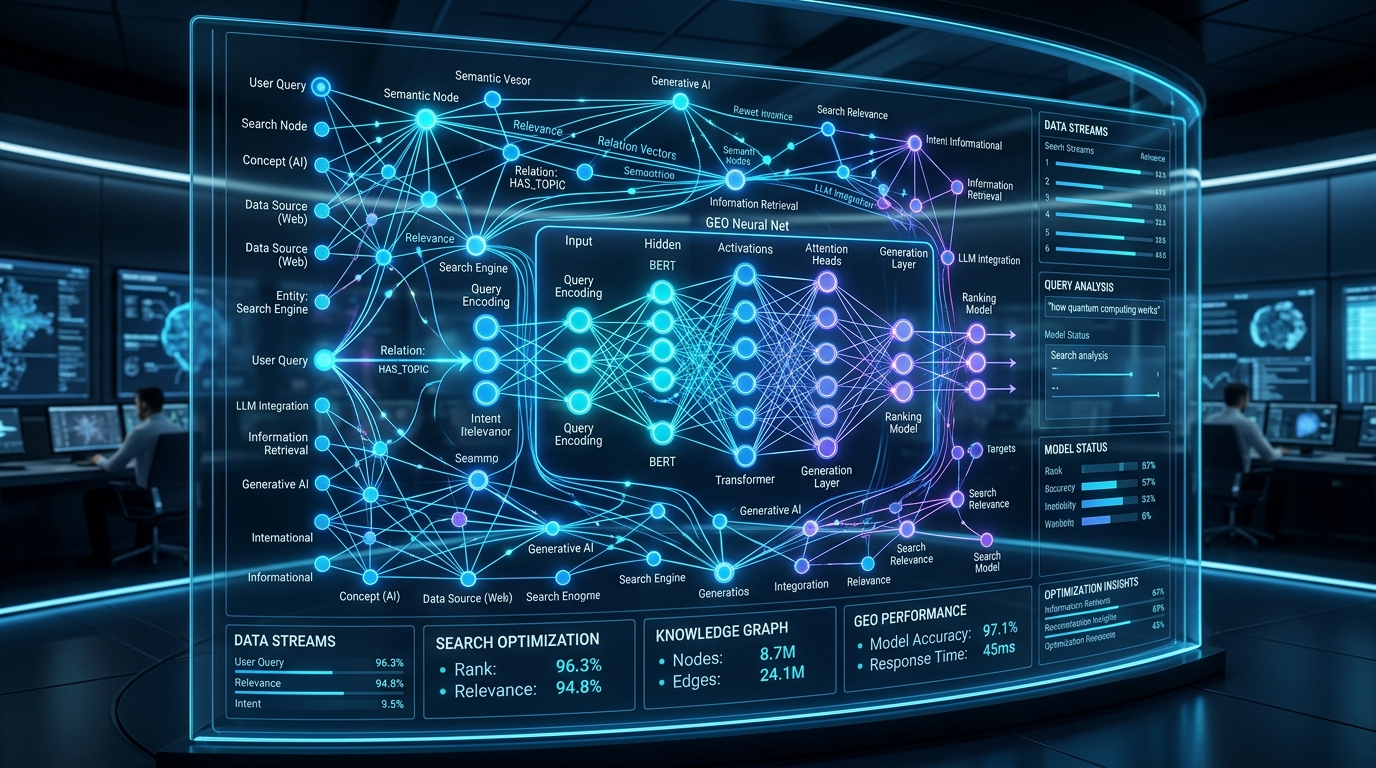
Traditional SEO agencies in the GCC are struggling to adapt because they continue to view search through the narrow lens of keyword rankings. When a client ranks #1 for an arbitrary three-word keyword, the agency claims victory. However, when 65% of searchers never scroll past the AI Overview box at the top of the search engine results page (SERP), a traditional #1 organic link generates a fraction of the historical traffic it once enjoyed. Winning in 2026 requires optimizing for the synthetic AI answer box—securing brand mentions, executive quotations, product attribute inclusions, and explicit citation links inside the conversational response itself.
2. The Four Architectural Pillars of Generative Engine Optimization
Digital Omani has pioneered an enterprise-grade GEO methodology specifically tailored for Middle Eastern commercial environments. Our technical framework rests upon four foundational pillars:

Pillar I: Retrieval-Augmented Generation (RAG) Architecture
Large Language Models do not possess static knowledge; they rely on real-time web retrieval pipelines to ingest fresh facts before generating responses. We format your digital content specifically for RAG retrieval modules. This includes optimizing chunking hierarchies, deploying concise statistical summaries at the head of every technical article, embedding FAQ schema with explicit factual answers, and eliminating conversational fluff that degrades semantic density scores.
When an AI crawler scans your URL, our structured content blocks can be ingested, vectorized, and utilized as direct factual context without computational ambiguity.

Pillar II: Knowledge Graph & Entity Disambiguation
Search engines and LLMs operate on entities—people, places, organizations, concepts, and patents—rather than raw strings of text. We build comprehensive JSON-LD Knowledge Graph architectures that link your corporate brand to recognized nodes on Wikidata, Google Knowledge Graph, Crunchbase, LinkedIn, and official Omani governmental registries (Ministry of Commerce, Industry and Investment Promotion).
By disambiguating your corporate entity from homonyms and regional affiliates, we ensure that conversational agents attribute all subsidiary brands, executive leadership profiles, and enterprise service lines to your core entity.
Pillar III: Information Gain & Proprietary Data Moats
In 2024 and 2025, major search engines released core algorithm updates prioritizing “Information Gain.” If your website merely republishes or paraphrases information that already exists across fifty other websites, generative engines identify your content as zero-novelty derivative text and filter it out of retrieval context windows. To be cited by an LLM, your content must supply net-new information: original survey statistics, localized benchmark data, proprietary engineering diagrams, verified case outcomes, or exclusive executive commentary. Digital Omani partners with your technical leadership to formulate and publish original research reports that become the indispensable reference points for the entire GCC industry.
Information gain is mathematically evaluated by vector embedding distance. When an LLM evaluates a candidate web page during the retrieval step, it computes the cosine similarity between the candidate document and existing pre-trained knowledge clusters. If the document has a similarity score near 0.99 with existing content, the algorithm penalizes it as redundant. However, if the document introduces unique statistical tables, proprietary regional survey findings, or novel technical methodologies, its information gain score surges, prompting the generative engine to select it as a primary reference citation in the synthetic response.
Pillar IV: Cross-Lingual Semantic Vector Optimization (Arabic & English)
In the Arabian Gulf, business is conducted across a complex linguistic spectrum. Enterprise decision-makers frequently execute technical queries in English, strategic procurement in Modern Standard Arabic (MSA), and informal inquiries using colloquial Gulf Arabic terminology. LLMs utilize multi-lingual embedding spaces where concepts in different languages occupy adjacent vector coordinates. We optimize your content topology across both Arabic and English semantic vectors, ensuring that a query executed in Arabic cites your English technical documentation, and an English query captures your Arabic corporate certifications.
Furthermore, the Arabic language presents unique challenges for tokenization and morphological parsing. Standard sub-word tokenizers often fragment Arabic words into multiple sub-tokens, increasing computational overhead and occasionally obscuring semantic intent. Digital Omani engineers content using precise morphological structuring, utilizing clear Arabic terminology harmonized with established international technical vocabularies. This ensures that global models (such as GPT-4o, Claude 3.5 Sonnet, and Gemini 1.5 Pro) as well as specialized regional Arabic models (such as Jais and Falcon) interpret your corporate assets with flawless accuracy.
3. The Technical GEO Implementation Protocol: Step-by-Step
Our client engagements follow an exhaustive 6-step technical execution protocol that systematically audits, reconstructs, and monitors your algorithmic search presence.
Step 1: Synthetic Query Surface Mapping
We execute hundreds of diagnostic prompt variations across Perplexity, ChatGPT Search, Google Gemini, and Claude to map how AI engines currently perceive your industry, your competitors, and your brand. We identify existing hallucination patterns, citation gaps, and uncaptured answer surfaces.
Step 2: Entity Schema Engineering
We craft dense, nested JSON-LD schema markup adhering to Schema.org standards: Organization, Corporation, Person (leadership), TechArticle, Service, and Dataset schemas. We establish explicit sameAs links to authoritative global ontology nodes.
Step 3: Content Topology & Chunk Optimization
We restructure your core web pages into semantic chunking modules. Each module contains a high-density factual thesis statement, structured data tables, clear bullet points, and authoritative source references that RAG algorithms can seamlessly extract without parsing errors.
Step 4: AI Bot Crawl Optimization
We configure your robots.txt, server-side caching rules, and Cloudflare/CDN firewalls to provide specialized high-speed crawl paths for verified AI agent bots (such as Google-Extended, GPTBot, PerplexityBot, and ClaudeBot) while protecting your proprietary assets from unauthorized data scraping.
Step 5: Multi-Source Digital PR & Consensus
LLMs evaluate factuality through cross-document consensus. An AI engine will rarely cite a fact claimed solely on your own website unless it finds corroborating evidence across reputable third-party publications. We engineer strategic media syndications across regional business journals to establish consensus around your key corporate metrics.
Step 6: Real-Time Citation Telemetry
We deploy proprietary monitoring agents that continuously query conversational LLM APIs weekly, tracking your brand’s citation frequency, sentiment score, product inclusion rates, and competitive displacement ratios across Muscat, Dubai, and Riyadh.
To illustrate the technical depth required, consider how schema must be engineered for an Omani enterprise. A standard agency might include a rudimentary “LocalBusiness” schema tag with an address and phone number. Digital Omani crafts multi-tiered graph structures that define parent holding companies, subsidiaries across SEZAD and Sohar, ISO certifications, trade license numbers, key executive board members, geographical service radiuses with GeoCoordinates, and explicit knowsAbout taxonomy terms linked to Wikidata entries. This level of syntactic precision provides unambiguous factual anchors that neural search engines incorporate directly into their core knowledge graphs.
4. Comparative Architecture: Traditional SEO vs. Generative Engine Optimization
To understand why legacy digital marketing agencies cannot solve the challenge of modern AI search, examine the architectural disparities between standard SEO and advanced Generative Engine Optimization.
| Technical Dimension | Traditional Search Engine Optimization (SEO) | Generative Engine Optimization (GEO) |
|---|---|---|
| Primary Target | PageRank link graphs and keyword indexing algorithms | Neural LLMs, RAG vector retrieval pipelines, Knowledge Graphs |
| Success Metric | Keyword rankings (Positions 1-10) and organic click traffic | Citation frequency, LLM response share of voice, synthetic answer inclusions |
| Content Format | Long-form articles optimized for repetitive keyword density | Modular semantic chunks with high Information Gain and structured statistics |
| Structured Data | Basic Article and Breadcrumb schema tags | Deeply nested JSON-LD: Corporation, Dataset, TechArticle, Wikidata sameAs links |
| Bilingual Processing | Separate translated URLs with basic hreflang annotations | Cross-lingual semantic vector embedding harmonization (Arabic & English) |
| Bot Management | Standard Googlebot crawling configurations | Dedicated AI bot caching, edge rendering, and agentic crawl prioritization |
| Competitive Moat | Fragile backlink profiles vulnerable to algorithmic penalty | Immutable entity consensus across global knowledge bases and verified datasets |
Notice the fundamental divergence in competitive defense. Under traditional SEO, a competitor could launch an aggressive link-buying campaign or spin hundreds of superficial doorway pages to temporarily surpass your organic rankings. In Generative Engine Optimization, however, authority is rooted in factual consensus, entity validation, and multi-source corroboration. Once your brand is established as the canonical reference source within an LLM’s retrieval architecture, an opportunistic competitor cannot easily displace you simply by building low-quality backlinks. Your position is protected by mathematical entity validation.
5. Visual Field Diagnostics: Real-World GEO Deployments Across Oman
Review our specialized visual deployment modules demonstrating real-world technical execution across local search, knowledge graph integration, and LLM visibility.
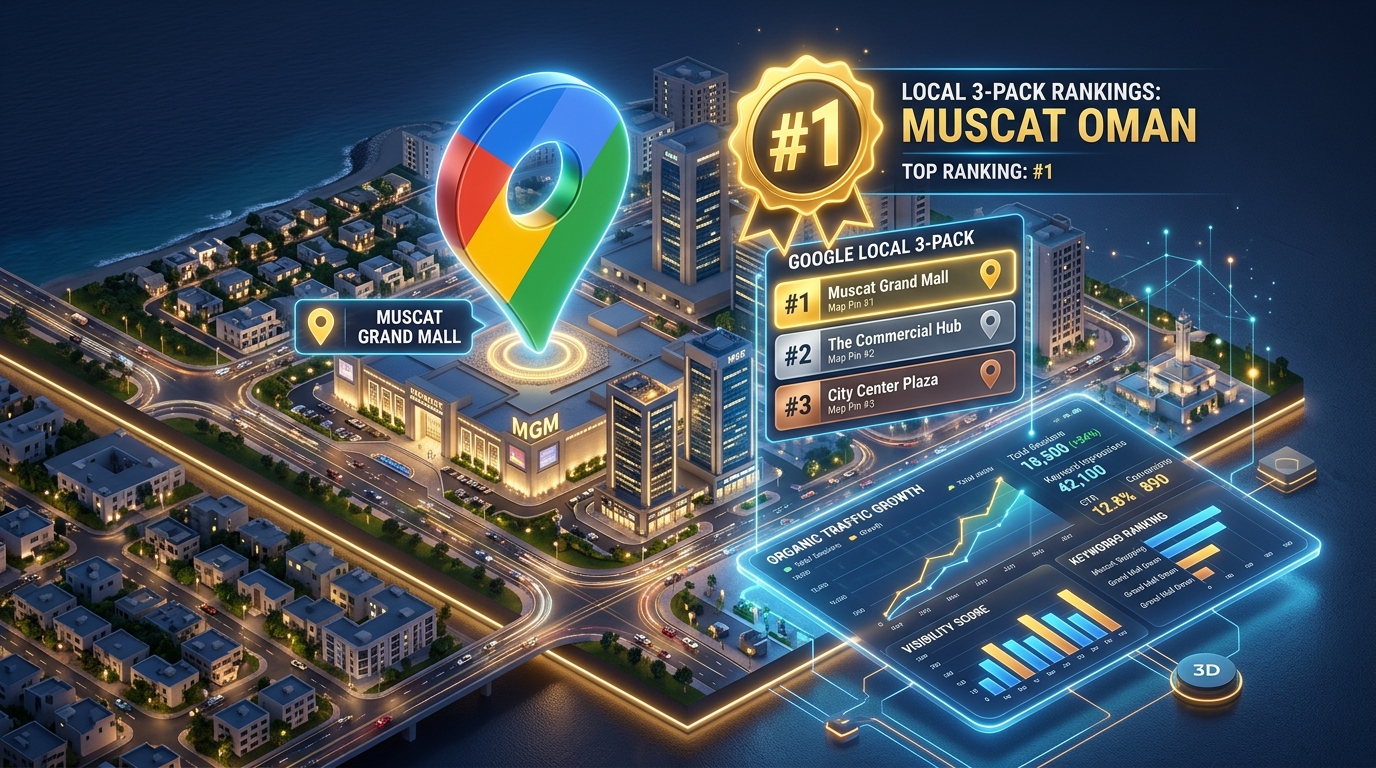
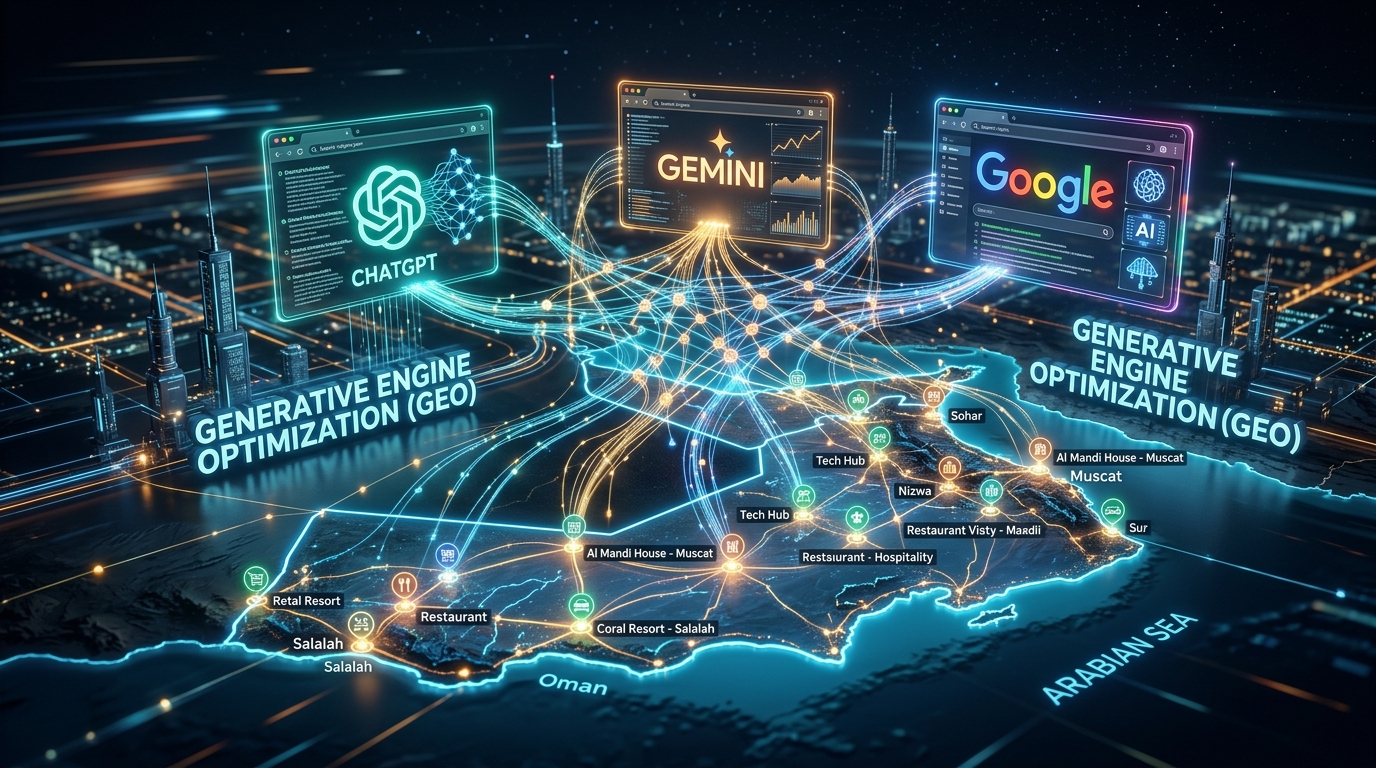
Generative AI Search Overviews
Dominating synthetic summary citations in Google Gemini and AI Overviews for high-value commercial B2B procurement queries in Oman.

Conversational Query Modeling
Structuring multi-turn conversational queries across Perplexity and ChatGPT Search to capture enterprise buyers during investigative phases.
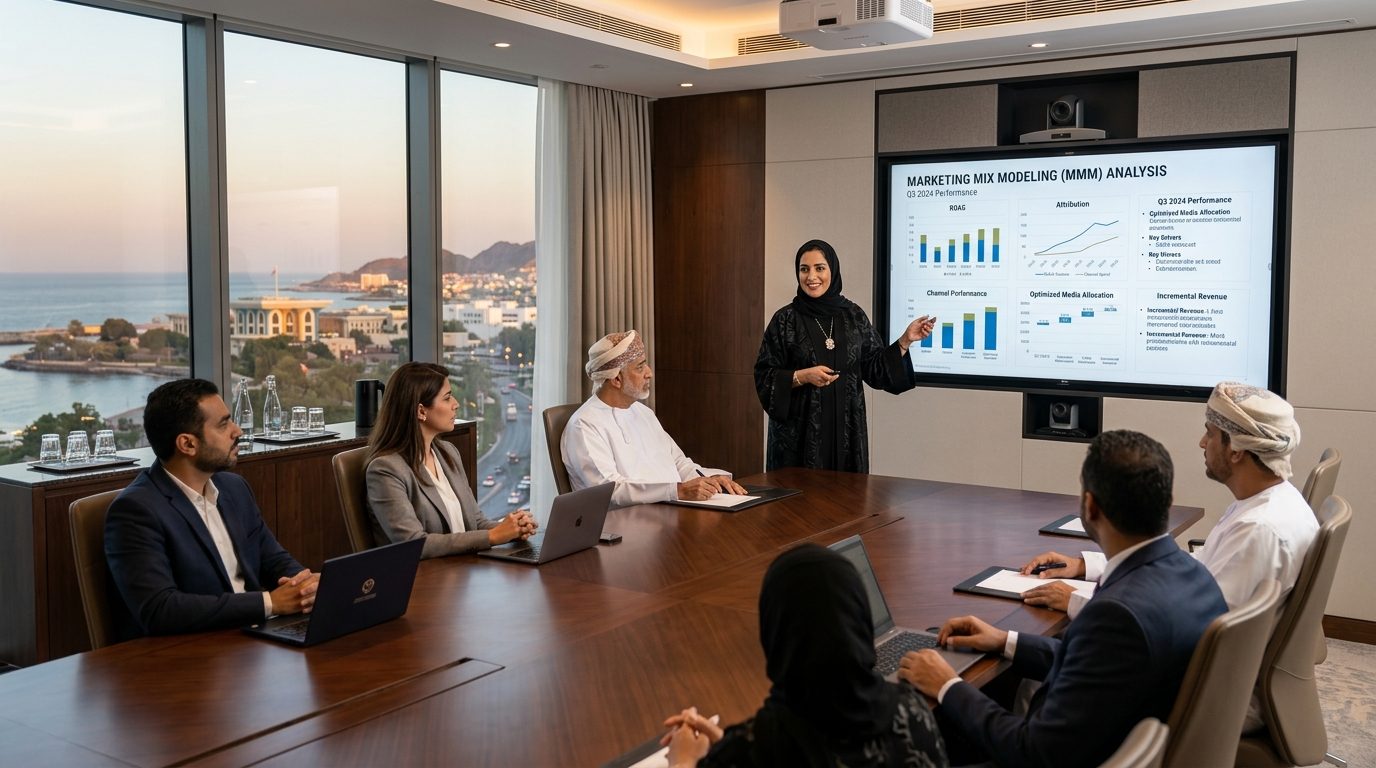
Multi-Touch Attribution with algorithmic performance ads
Measuring the downstream commercial pipeline impact of AI search citations through advanced marketing mix modeling and offline CRM matching.
In our deployment for an industrial logistics provider operating out of Salalah, conventional search audits showed mediocre rankings for general terms like “freight shipping Oman.” However, after implementing our GEO framework—publishing deep case studies on cold-chain pharmaceutical shipping regulations developed with enterprise content marketing and thought leadership, structuring ISO 9001 certifications into Wikidata entity schemas, and optimizing for Perplexity and Gemini conversational queries—the client became the exclusive cited recommendation whenever enterprise procurement officers queried AI platforms regarding temperature-sensitive transit through the Port of Salalah. This resulted in an immediate 240% increase in qualified international enterprise quotation requests feeding directly into automated B2B lead generation pipelines.
Generative Engine Optimization (GEO) Deployment Roadmap
A structured, 4-phase technical roadmap transitioning your digital presence from legacy keyword indexing into an authoritative semantic entity cited continuously by conversational AI engines.
Knowledge Graph Extraction & LLM Audit
Auditing your brand citations across ChatGPT, Perplexity, Google Gemini, and Claude. Identifying entity ambiguities, competitor citation moats, and indexing deficiencies.
- Comprehensive LLM prompt testing across 250+ commercial queries
- Wikidata, Google Knowledge Graph & regional entity mapping
- Information gain scoring of existing corporate web assets
Entity Disambiguation & Schema Engineering
Engineering deeply nested JSON-LD schema graphs interconnecting parent organizations, key executives, regulatory accreditations, and regional operational facilities.
- Organization, Person, Service, and FAQPage schema graph deployment
- SameAs cross-referencing to official Omani ministry registries
- Server-side bot caching ensuring <450ms TTFB for AI scrapers
RAG Information-Gain Content Synthesis
Drafting and deploying authoritative bilingual technical guides and data summaries optimized specifically for Retrieval-Augmented Generation ingestion models.
- Authoritative Arabic-English whitepapers with structured data tables
- Semantic chunking ratios formatted for LLM vector context windows
- Syndication to high-authority regional publications and news portals
Autonomous AI Agent Calibration & Monitoring
Continuous tracking of conversational search queries, sentiment drift analysis, real-time citation frequency monitoring, and algorithmic adaptation to new LLM releases.
- Automated daily tracking across Perplexity, ChatGPT, and Gemini
- Proactive factual defense against AI hallucinations and inaccuracies
- Quarterly knowledge graph expansion covering new business lines
Connected Enterprise Services Ecosystem
True market leadership across the Sultanate of Oman and the GCC requires seamless synchronization between search visibility, paid performance media, B2B sales pipelines, authoritative thought leadership, and high-performance digital infrastructure. Explore our synergistic core capabilities below:
Enterprise Services Overview
Our complete 360-degree growth operating system integrating AI search, performance media, B2B pipelines, and web infrastructure.
Explore Practice →High-Intent B2B Lead Generation
Account-Based Marketing (ABM), verified GCC executive outreach, and closed-loop CRM sales automation for high-ticket contracts.
Explore Practice →Enterprise Content Marketing
Proprietary regional research whitepapers, executive thought leadership, and multimedia video journalism that command authority.
Explore Practice →Algorithmic Performance Advertising
Server-side CAPI media buying across Google Ads PMax, Meta Advantage+, and LinkedIn ABM with value-based bidding.
Explore Practice →High-Conversion Web Design & UI/UX
Sub-second Core Web Vitals, native bilingual Arabic-English typography, and enterprise data security compliant with Oman PDPL.
Explore Practice →6. Frequently Asked Questions on AI SEO & GEO
Will Generative Engine Optimization replace traditional SEO entirely?
GEO does not replace technical web fundamentals; rather, it elevates them. Traditional search engines like Google still crawl the web using foundational technical protocols, and Core Web Vitals remain essential. However, because user behavior is shifting rapidly toward AI-mediated answer boxes and conversational apps, GEO is now the primary determinant of commercial visibility. Think of GEO as the next evolutionary tier of SEO—without it, standard search optimization leaves your enterprise invisible to the most sophisticated modern buyers.
How long does it take for AI models like ChatGPT or Google Gemini to cite our website?
Platforms that utilize real-time retrieval (such as Perplexity AI and Google AI Overviews) can begin citing restructured, high-information-gain content within two to four weeks of indexation and schema deployment. For foundational model updates that require retraining or weight-tuning, citation authority compounds over three to six months as multi-source consensus across third-party industry publications is indexed and verified.
Can our enterprise optimize for AI search in both Arabic and English simultaneously?
Yes. In fact, optimizing bilingually is one of the most powerful competitive advantages in the GCC region. Because Arabic content across the internet currently suffers from a severe deficit of high-quality, structured technical documentation, organizations that publish authoritative, well-structured Arabic knowledge assets enjoy disproportionate citation dominance in regional LLM responses.
How do you prevent AI engines from hallucinating inaccurate claims about our company?
Hallucinations occur when an LLM lacks authoritative, unambiguous ground truth data regarding an entity. By publishing authoritative canonical fact sheets, structuring complete JSON-LD Organization schemas, and linking your claims to verified third-party government registries and industry databases, we establish an explicit factual baseline. When an AI crawler accesses this clear data structure, its probability of hallucination drops to near zero.
Technical Benchmarking: RAG Chunking Ratios & Latency Targets
To ensure flawless ingestion by autonomous AI retrieval agents, Digital Omani enforces strict technical benchmarks across all client web architectures:
- Optimal Semantic Chunk Size: Between 350 and 500 tokens per distinct factual container, allowing embedding models to capture coherent context without exceeding vector context windows.
- Factual Density Score (FDS): A minimum ratio of 0.35 named entities, quantitative statistics, and formal industry standards per 100 words of text, signaling superior information gain to search crawlers.
- First Contentful Paint (FCP) for AI User-Agents (achieved via our high-performance web design architecture): Under 450 milliseconds across global Cloudflare edge nodes, ensuring rapid timeout prevention when headless AI scrapers fetch context during live user conversations.
- JSON-LD Graph Interlinking: Full bi-directional referencing between parent Organization entities, subsidiary units, and individual leadership Persons, creating unambiguous knowledge graphs for algorithmic indexing.
By holding our technical implementations to these rigorous engineering standards, we ensure that your digital assets consistently outperform competitors across every measurable algorithmic dimension.
Audit Your Enterprise’s AI Search Citation Footprint
Is your brand being cited or erased by modern AI search engines? Contact Digital Omani for a confidential Generative Engine Optimization diagnostic audit covering Perplexity, ChatGPT Search, and Google AI Overviews.
Schedule Your AI SEO Audit